Explore resorts ↗

Ski resorts in Austria

Austria combines traditional Tyrolean villages, excellent ski schools and the best après-ski in the Alps with big, modern lift systems. Short transfers from Innsbruck and Salzburg make it easy to reach, and there are resorts for every level, from gentle family slopes to the steep terrain of the Arlberg.

Resorts featured
5
Largest ski area
300 km
Highest lift
2,872 m

Why ski in Austria?

Austria has a ski culture all of its own. Many resorts grew out of farming villages rather than being built from scratch, so you are more likely to stay in a family-run hotel or guesthouse beside an onion-domed church than in a purpose-built apartment block. Mountain huts serve hearty Austrian food, from Kaiserschmarrn to Tiroler Gröstl, and the welcome is famously warm.

The skiing is serious too. Lift companies have invested heavily in fast, comfortable gondolas and heated chairlifts, and several resorts are linked into large ski areas. Ski Arlberg, which joins St Anton with Lech, Zürs, Stuben and Warth-Schröcken, is the biggest at around 300 km of pistes, and the Kitzbühel, SkiWelt Wilder Kaiser–Brixental and Saalbach areas each offer hundreds of kilometres more. Austria also has several glacier ski areas, including Hintertux, its only year-round ski area, and Sölden, which hosts the opening race of the alpine World Cup.

And then there is après-ski. In resorts such as St Anton, Ischgl, Saalbach and Mayrhofen, the party starts in slope-side bars in mid-afternoon and carries on into the evening.

Who skiing in Austria suits

  • Beginners and families, thanks to excellent, well-organised ski schools and plenty of easy slopes close to the villages.
  • Intermediates, who can cruise across large linked areas such as the SkiWelt and the Skicircus Saalbach.
  • Experts, especially in the Arlberg, where the off-piste and marked, unpatrolled ski routes are some of the best in the Alps.
  • Groups who love après-ski, which is livelier in Austria than anywhere else in Europe.

The main trade-off is altitude. Many Austrian villages sit lower than the big French resorts, so snow at village level can be less reliable early and late in the season. Choose a high or glacier resort if snow is your priority.

Ski regions in Austria

Most of Austria's best-known resorts are in the west of the country, in Tyrol, Vorarlberg and the Salzburg region, within easy reach of Innsbruck, Salzburg, Munich and Zurich airports.

Arlberg (Tyrol and Vorarlberg)

The birthplace of modern alpine skiing. St Anton is known for steep pistes, deep off-piste and lively après-ski, while Lech and Zürs, across the Vorarlberg border, are quieter and more exclusive. All are linked in the Ski Arlberg area, one of the largest in the Alps.

Tyrol

Austria's biggest ski region. The Kitzbühel Alps include historic Kitzbühel, home of the Hahnenkamm downhill, and the SkiWelt Wilder Kaiser–Brixental around Söll and Ellmau. The Zillertal valley includes Mayrhofen and the Hintertux Glacier, and the Ötztal is home to high-altitude Sölden and Obergurgl. In the far west, Ischgl links with Samnaun in Switzerland.

Salzburg region

Salzburgerland is home to the Skicircus Saalbach Hinterglemm Leogang Fieberbrunn, a big, well-linked circuit popular with intermediates, and the Ski Amadé network, which includes resorts such as Flachau, Schladming and Bad Gastein. Zell am See–Kaprun combines lakeside scenery with glacier skiing on the Kitzsteinhorn.

Carinthia and Styria

Further east and south, resorts such as Bad Kleinkirchheim, Nassfeld and the Mölltal Glacier are quieter and often cheaper, and they attract more Austrian and central European skiers than British ones.

Choosing a ski resort in Austria

Austria offers something for most skiers, but resorts vary a lot in size, altitude and atmosphere.

How good a skier are you?

Austria is one of the best countries in Europe to learn to ski: ski schools are excellent and many villages have nursery slopes right by the hotels. Intermediates should look at large linked areas such as the SkiWelt or the Skicircus Saalbach. Advanced skiers and off-piste fans will be happiest in St Anton or elsewhere in the Arlberg.

How important is snow reliability?

If you are travelling early or late in the season, choose a high resort, such as Obergurgl or Sölden, or a resort with a glacier, such as Hintertux or Kaprun. Lower resorts such as Söll and Kitzbühel are charming and good value, but they rely more on snowmaking in a lean winter.

How much après-ski do you want?

Some resorts are known for their nightlife: St Anton, Ischgl, Saalbach and Mayrhofen are the big names. If you want a quieter week, Lech, Obergurgl and many smaller Tyrolean villages are far calmer once the lifts close.

What is your budget?

Lech, Zürs and Kitzbühel sit at the top end. Austria can still be good value, especially in smaller resorts and in January or late March, and half-board hotels, which include breakfast and dinner, help keep costs predictable.

Where to ski

Ski resorts in Austria

  • Best for experts and après-ski

    St Anton

    Challenging slopes, legendary off-piste and some of the liveliest après-ski in the Alps, at the heart of Ski Arlberg.

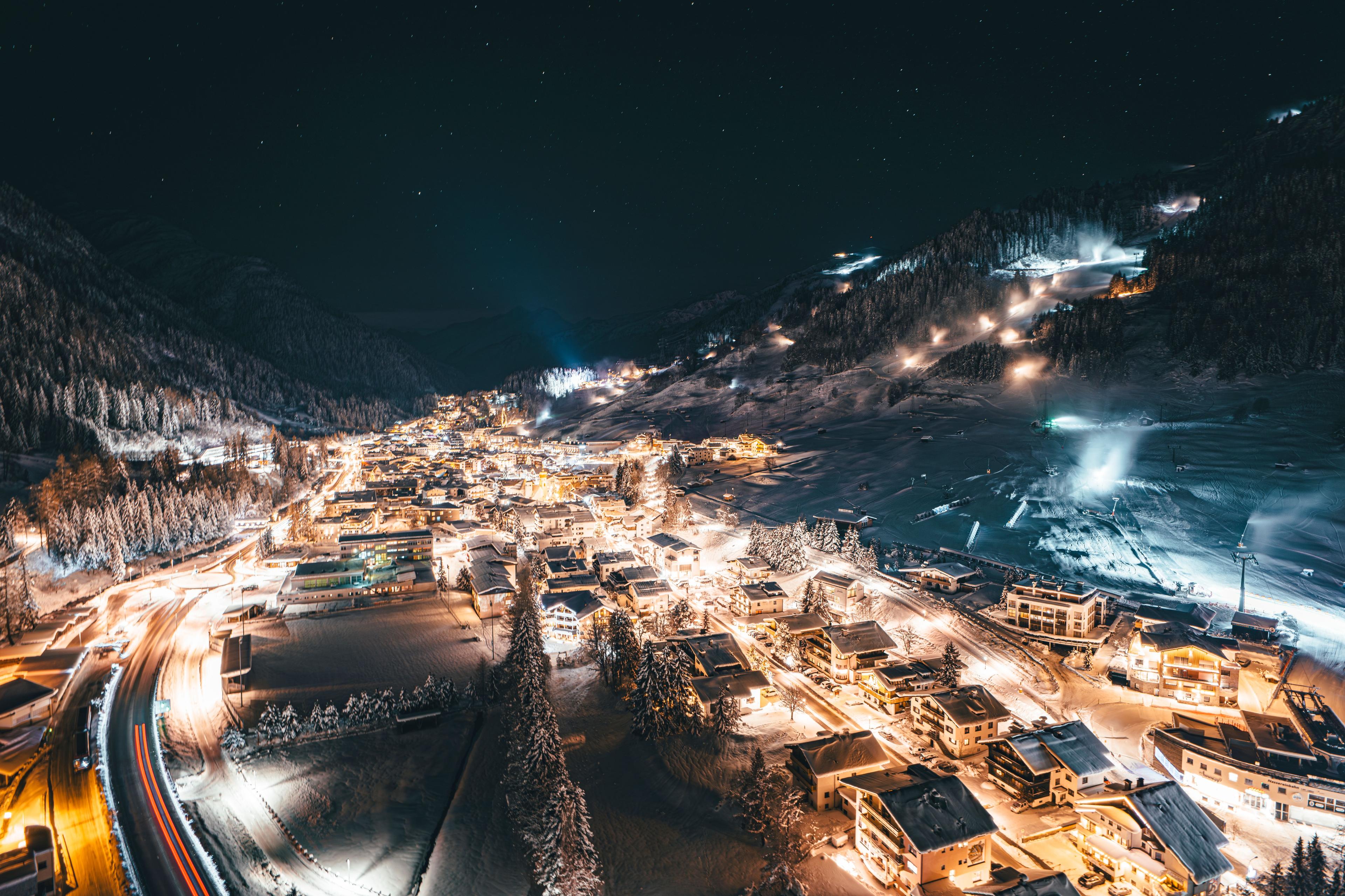
Image credit: TVB St. Anton am Arlberg, Photographer: Martin Ebster

St Anton

Skill level: AdvancedBest for Experts, Off-piste, Après-ski

Explore the slopes, discover where to stay and plan your next mountain escape.

300 km

Ski pistes

2,811 m

Top altitude

Advanced

Skiing

Explore resort stays

View holidays

Ischgl

Skill level: Intermediate – AdvancedBest for Après-ski, Intermediates, Snow-sure

Explore the slopes, discover where to stay and plan your next mountain escape.

239 km

Ski pistes

2,872 m

Top altitude

Intermediate – Advanced

Skiing

Explore resort stays

Booking link coming soon

Kitzbühel

Skill level: IntermediateBest for Intermediates, Après-ski, Luxury

Explore the slopes, discover where to stay and plan your next mountain escape.

233 km

Ski pistes

2,000 m

Top altitude

Intermediate

Skiing

Explore resort stays

Booking link coming soon

Mayrhofen

Skill level: All levelsBest for Mixed groups, Après-ski, Snowboarders

Explore the slopes, discover where to stay and plan your next mountain escape.

Family

142 km

Ski pistes

2,095 m

Top altitude

All levels

Skiing

Explore resort stays

Booking link coming soon

Compare ski resorts in Austria

Compare the Austrian resorts we cover side by side, from ski area size and top altitude to who each resort suits. Many Austrian resorts belong to larger lift-linked areas, so check what your lift pass covers.

Ski resorts in Austria compared by pistes, altitude, ability and season
ResortRegionPistesTop altitudeBest suited toSeasonBook
St AntonArlberg300 km2,811 mAdvancedBest for Experts, Off-piste, Après-skiDec - AprHolidays ↗
IschglPaznaun239 km2,872 mIntermediate – AdvancedBest for Après-ski, Intermediates, Snow-sureNov - May
KitzbühelKitzbühel Alps233 km2,000 mIntermediateBest for Intermediates, Après-ski, LuxuryNov - Apr
MayrhofenZillertal142 km2,095 mAll levelsBest for Mixed groups, Après-ski, SnowboardersDec - Apr
Saalbach HinterglemmSalzburgerland270 km2,020 mIntermediateBest for Intermediates, Families, Après-skiNov - Apr

Holidays are offered by our booking partners; check the partner site for current availability.

Plan your trip

Travel information for Austria

Ski season
Early December – mid April (glaciers from autumn to late spring)
Flight time from the UK
About 1h 45m – 2h to Innsbruck, Salzburg or Munich
Main ski airports
Innsbruck, Salzburg, Munich, Zurich (for the Arlberg)
Typical transfers
1 – 3 hours
By train
Eurostar to Brussels or Amsterdam, then onward rail or Nightjet sleeper to Innsbruck
Currency
Euro (€)
Language
German
Time difference
UK +1 hour

Getting there

Austria is a short flight from the UK, and transfers to many resorts take under two hours.

By air

Innsbruck is the closest airport for much of Tyrol, with St Anton, the Zillertal and the Kitzbühel Alps within about 1 to 2 hours. Salzburg is best for the Salzburg region and parts of eastern Tyrol. Both are busy with ski flights on winter Saturdays, so delays can happen. Munich has the widest choice of flights and is around 2 to 3 hours from many Tyrolean resorts, while Zurich is a good option for the Arlberg and Vorarlberg. Flights from the UK take about 1 hour 45 minutes to 2 hours.

By train

Austria's rail network is excellent, and many resorts are close to a station: St Anton has its own station on the main Arlberg line. From London, take the Eurostar to Brussels or Amsterdam and continue by rail, either on daytime trains via Germany or on an ÖBB Nightjet sleeper to Innsbruck. Check routes and dates on the ÖBB or Nightjet website, as services change from season to season.

By car

Driving from Calais to Tyrol takes around 10 to 12 hours. You need a vignette (toll sticker or digital vignette) to use Austrian motorways, and winter tyres are required in wintry conditions from 1 November to 15 April. Carry snow chains for mountain roads.

When to go

The main Austrian ski season runs from early December to mid April, with glacier areas such as Hintertux, Stubai and Sölden opening in autumn and staying open into late spring.

Month by month

  • December: Christmas markets and festive atmosphere, but snow cover at lower villages can be thin before Christmas. Christmas and New Year are busy and expensive.
  • January: Usually the best value, with cold, crisp conditions and quieter slopes after the first week.
  • February: Good snow and the busiest month. Austrian school half-term (Semesterferien) is staggered by region; in 2027 it runs from 1 to 20 February and overlaps with UK February half-term, so book early.
  • March: Longer, sunnier days and generally good snow at altitude. A great month for intermediates and families outside the Easter week.
  • April: Spring skiing and lower prices in high and glacier resorts; lower resorts start to close. Easter falls on 28 March in 2027.

Practical information

Lift passes

Lift passes for the biggest areas are a little cheaper than in top French resorts but are still a major cost, with lower rates before Christmas and late in the season. Children, young adults and seniors get discounts, and many regions also sell passes covering several ski areas.

Insurance and healthcare

Your UK GHIC gives access to state healthcare in Austria, but it does not cover mountain rescue, helicopter evacuation or repatriation, which can be very expensive. Buy travel insurance that includes winter sports, and check the cover for off-piste skiing and ski routes.

Money and language

Austria uses the euro, and cards are widely accepted, although some mountain huts and smaller bars prefer cash. German is the main language, but English is widely spoken in ski resorts.

On the slopes

Austrian pistes are graded blue (easiest), red and black (hardest); there are no green runs, so beginners start on nursery areas and gentle blues. Ski routes, marked in yellow or orange, are unpatrolled and ungroomed and should be treated like off-piste. Helmets are compulsory for children under 15 in most Austrian states, though not in Tyrol or Vorarlberg, and are strongly recommended for everyone.

Ski resorts in Austria: FAQs

What is the best ski resort in Austria?

It depends on what you want. St Anton is the top choice for advanced skiers and après-ski, Lech for luxury, Obergurgl and Sölden for snow-sure skiing, and large linked areas such as the SkiWelt or Saalbach for intermediates and families.

When is the ski season in Austria?

Most Austrian ski resorts open in early December and close in mid April. Glacier ski areas such as Hintertux, Stubai and Sölden open in the autumn, and Hintertux is open year-round.

What is the biggest ski area in Austria?

Ski Arlberg, which links St Anton, St Christoph, Stuben, Lech, Zürs and Warth-Schröcken, is the largest single linked ski area, with around 300 km of pistes. Saalbach, the SkiWelt Wilder Kaiser–Brixental and Kitzbühel are also very large.

Is Austria good for beginner skiers?

Yes. Austria has some of the best ski schools in Europe and many villages have nursery slopes close to the hotels. Note that Austria grades its easiest pistes blue, as there are no green runs.

How do you get to the Austrian Alps from the UK?

Most skiers fly to Innsbruck or Salzburg, which take about 2 hours from the UK, then transfer by road in 1 to 2 hours. Munich and Zurich are alternatives with more flights but longer transfers. You can also travel by Eurostar and onward rail, including the Nightjet sleeper to Innsbruck.

Is skiing in Austria cheaper than France?

Often, yes. Lift passes, accommodation and mountain restaurants are generally a little cheaper in Austria than in France's biggest resorts, and half-board hotels help keep costs down. Famous resorts such as Lech and Kitzbühel are still expensive.

Do you have to wear a helmet to ski in Austria?

Children under 15 must wear a helmet in most Austrian states, but not in Tyrol or Vorarlberg, where helmets are recommended. There is no helmet law for adults, but most skiers wear one.

Official information sources

Content last reviewed .